
Flower Names: A Complete Guide to Common and Botanical Names
The names of flowers explained — common names, their botanical (Latin) names, and how to read them — with an A–Z table of the most popular cut flowers and their scientific names.
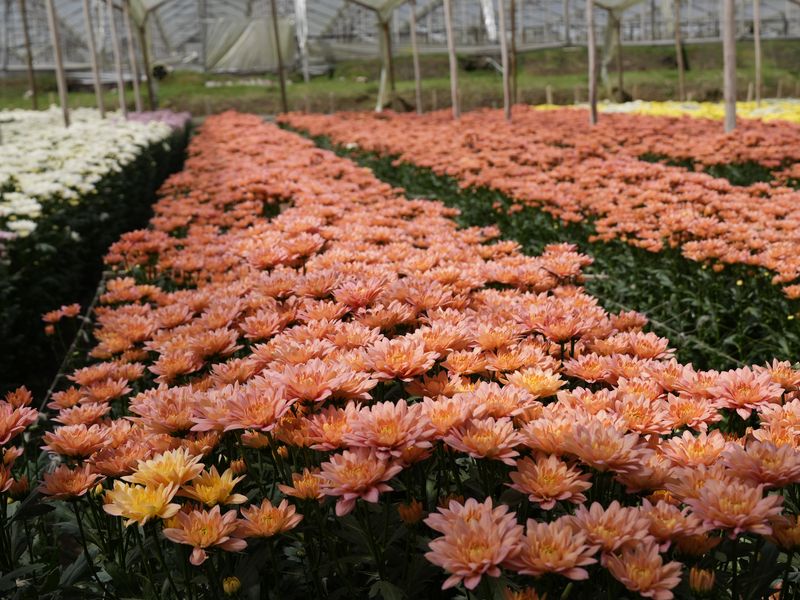
Every flower has at least two names: the everyday common name we all use, and the botanical (Latin) name that identifies it precisely anywhere in the world. Knowing both is surprisingly useful — it helps you order the exact flower you mean, avoid mix-ups, and understand what labels and growers are telling you. This guide explains how flower names work and gives an A–Z table of the most popular cut flowers with their botanical names.
Why flowers have two names
A common name is the familiar, local name — "rose", "sunflower", "baby's breath". It is easy but imprecise: the same common name can mean different plants in different places, and one flower can have several common names. A botanical name is the scientific, Latin name agreed worldwide — Rosa, Helianthus annuus, Gypsophila paniculata. It never changes between countries or languages, so it identifies a flower exactly. In the flower trade, serious buyers use botanical names (and named varieties) whenever precision matters.
How botanical names work
Botanical names follow a simple two-part system (binomial nomenclature), always written in italics:
- The first word is the genus — the broad group, capitalised (e.g. Rosa, Tulipa, Lilium).
- The second word is the species — the specific type, lowercase (e.g. Lilium longiflorum).
- Sometimes a third name in quotes is the cultivar or variety (e.g. Rosa 'Freedom'), the specific bred form growers sell.
So when you see Dianthus caryophyllus 'Nobbio Burgundy', that is the genus (Dianthus), species (caryophyllus — the carnation) and the exact variety. You do not need Latin to use this — just knowing the genus of the flowers you buy is already a big step.
Popular flower names: common and botanical (A–Z)
| Common name | Botanical name |
|---|---|
| Alstroemeria (Peruvian lily) | Alstroemeria |
| Anthurium | Anthurium andraeanum |
| Baby's breath | Gypsophila paniculata |
| Bird of paradise | Strelitzia reginae |
| Calla lily | Zantedeschia |
| Carnation | Dianthus caryophyllus |
| Chrysanthemum | Chrysanthemum |
| Daffodil | Narcissus |
| Dahlia | Dahlia |
| Delphinium | Delphinium |
| Gerbera (daisy) | Gerbera jamesonii |
| Hydrangea | Hydrangea macrophylla |
| Iris | Iris |
| Lily | Lilium |
| Lisianthus | Eustoma grandiflorum |
| Orchid (moth) | Phalaenopsis |
| Peony | Paeonia |
| Ranunculus | Ranunculus asiaticus |
| Rose | Rosa |
| Snapdragon | Antirrhinum majus |
| Statice | Limonium |
| Sunflower | Helianthus annuus |
| Tulip | Tulipa |
Common names that cause confusion
A few flowers trip people up because their common names are misleading or shared:
- Peruvian lily, calla lily and water lily are not true lilies (Lilium) at all — they are Alstroemeria, Zantedeschia and Nymphaea respectively.
- Baby's breath is the common name for Gypsophila — the same flower, two names.
- Mum is simply short for chrysanthemum.
- Billy balls / billy buttons are Craspedia.
- Lisianthus is also sold as Eustoma, its genus — the same flower.
When a name could be ambiguous, the botanical name settles it.
Choosing flowers by name
For most buying, the practical trio is: the common name to find the flower, the genus to be precise, and the variety name to lock in the exact colour and form — for example "Freedom roses" or "Mondial roses" rather than just "red roses". Named varieties are how growers and florists guarantee they are talking about the same flower. See our flower encyclopedia A–Z for profiles of each flower, and our types of flowers A–Z guide for the full range.
Frequently asked questions
Why do flowers have Latin names?
Latin (botanical) names are a single worldwide standard, so a flower can be identified exactly regardless of country or language. Common names vary from place to place, while the botanical name never changes.
What is the botanical name for a rose?
The genus for all roses is Rosa. A specific rose adds a variety name, such as Rosa 'Freedom', which identifies the exact bred form.
Is baby's breath the same as gypsophila?
Yes. "Baby's breath" is the common name and Gypsophila is the botanical name for the same flower, widely used as a filler and for drying.
What flowers are not true lilies?
Peruvian lily (Alstroemeria), calla lily (Zantedeschia) and water lily (Nymphaea) are not true lilies — true lilies are the genus Lilium.
How do I order the exact flower I want?
Use the common name plus the variety name where possible — for example "Mondial white roses" or "Anastasia green chrysanthemums". This removes ambiguity and ensures you get the exact colour and form.
The right flower, by any name
Whatever you call them, having the exact flowers you need — the right genus, the right variety, in top condition — is what matters. At Vibra we select across Colombia and Ecuador by named variety, so you get precisely what you ordered. See our A–Z flower encyclopedia, or tell us what you buy and we will match it exactly.
Build your program
Tell us what you need. We will bring the right flowers, growers, and solutions together.
Request a quote