
Types of Flowers: An A–Z Guide for Buyers and Florists
A practical guide to the main cut-flower types — focal, secondary, filler and foliage — with an A–Z reference table of the flowers you will actually buy and use.
"Types of flowers" can mean a hundred things, but for anyone buying or arranging cut flowers, the useful way to think about it is by the job each flower does in a design. This guide explains the four functional types every florist works with, then gives an A–Z reference table of the cut flowers you will actually encounter — their type, colours and how long they last.
The four functional types of cut flowers
Florists rarely think in botanical families; they think in roles. Almost every stem you buy is one of four types:
- Focal flowers — the big, eye-catching centrepieces that anchor a design (roses, hydrangeas, large chrysanthemums, peonies, lilies).
- Secondary flowers — supporting blooms that add colour and spread around the focals (spray roses, spray carnations, lisianthus, alstroemeria).
- Filler flowers — small or airy blooms that add volume and texture cheaply (gypsophila, limonium, waxflower, solidago).
- Foliage / greenery — leaves and stems that frame the design and set its shape (eucalyptus, ruscus, ferns).
A balanced bouquet almost always combines all four: a few focals for impact, secondaries for spread, fillers for volume, greenery for the frame. Understanding the roles is what turns a pile of stems into a design — and what lets you cost a bouquet accurately.
Flower forms and shapes
Within those roles, flowers also come in recognisable forms, which affect how they are used: round / mass flowers (roses, carnations) give solid colour and structure; spike / line flowers (delphinium, gladiolus, snapdragon) give height and direction; spray flowers (spray roses, spray chrysanthemums) give a branched spread; and airy / filler flowers (gypsophila) give a soft cloud. Mixing forms — round, line and airy — is the classic recipe for a well-balanced arrangement.
A–Z reference: common cut flowers
The table below is a working reference to the cut flowers you are most likely to buy and use, with their functional type, main colours and typical vase life.
| Flower | Type | Main colours | Typical vase life |
|---|---|---|---|
| Alstroemeria | Secondary | Many | 1.5–2 weeks |
| Amaryllis | Focal | Red, white, pink | 1–2 weeks |
| Aster | Secondary/filler | Purple, pink, white | 1–1.5 weeks |
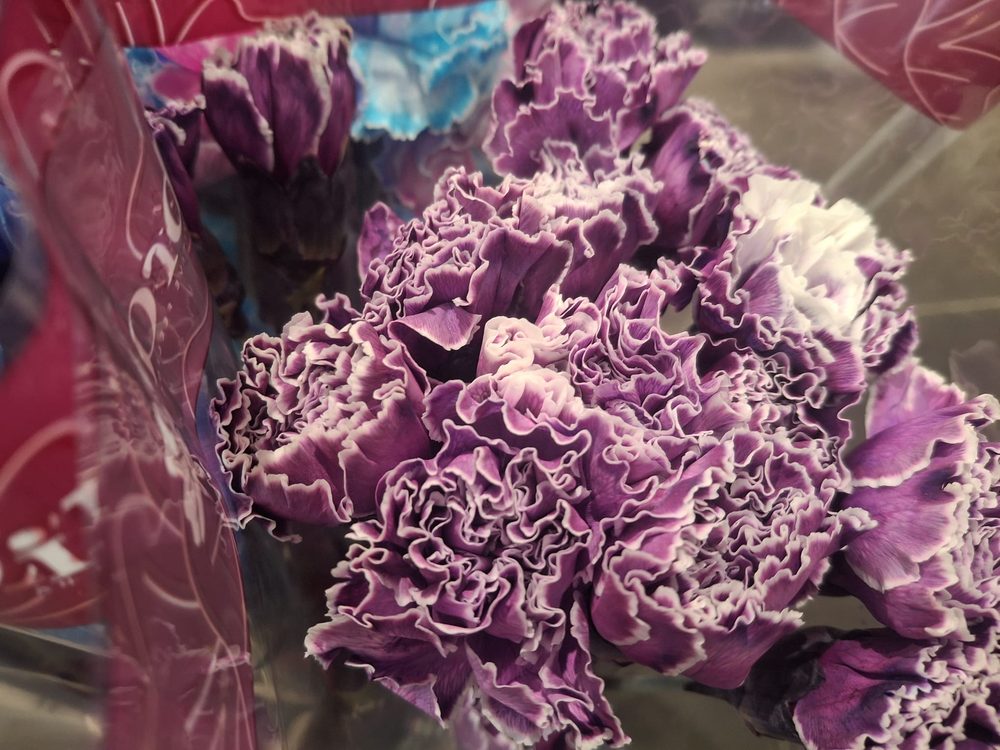
| Carnation | Focal/secondary | Full range + tinted | 2–3 weeks |
| Chrysanthemum | Focal/secondary | Full range | 2–3 weeks |
| Dahlia | Focal | Many | 4–7 days |
| Delphinium | Line | Blue, white, purple | 5–7 days |
| Eucalyptus | Foliage | Green/silver | 2+ weeks |
| Gerbera | Focal | Bright range | 1–1.5 weeks |
| Gladiolus | Line | Many | 1–1.5 weeks |
| Gypsophila | Filler | White (+ tinted) | 1.5–2+ weeks |
| Hydrangea | Focal | Blue, pink, white, green, antique | 5–10 days |
| Lily | Focal | White, pink, orange, yellow | 1–2 weeks |
| Limonium | Filler | Purple, white, yellow | 1.5–2+ weeks |
| Lisianthus | Secondary | Purple, pink, white | 1–2 weeks |
| Orchid | Focal | Many | 1.5–3 weeks |
| Peony | Focal | Blush, pink, white, red | 4–7 days |
| Ranunculus | Focal/secondary | Many | 5–7 days |
| Rose | Focal | Full range | 1–2 weeks |
| Ruscus | Foliage | Green | 2+ weeks |
| Snapdragon | Line | Many | 5–7 days |
| Solidago | Filler | Yellow | 1–1.5 weeks |
| Sunflower | Focal | Yellow, bronze | 6–10 days |
| Tulip | Focal | Full range | 5–7 days |
| Waxflower | Filler | White, pink, purple | 1.5–2 weeks |
How to use this when buying
When you build an order, think in the four roles rather than in a wish-list of names. Start with the focal flowers your designs need, add secondaries for colour spread, and make sure you have enough filler and greenery for volume — that last part is where cost is controlled, because fillers and greens create fullness far more cheaply than extra focals. Matching vase life to how fast a flower will sell keeps waste down. In short, buy a balanced box, not just a pretty one.
Buyer's FAQ
What are the main types of cut flowers?
Functionally, four: focal flowers (the centrepieces), secondary flowers (colour and spread), filler flowers (cheap volume and texture) and foliage/greenery (the frame). Most bouquets use all four.
What is the difference between a focal and a filler flower?
Focal flowers are the large, eye-catching blooms that anchor a design (roses, hydrangeas); fillers are small or airy flowers (gypsophila, limonium) that add volume and texture at much lower cost.
What are the longest-lasting types of flowers?
Carnations and chrysanthemums (2–3 weeks), followed by alstroemeria, gypsophila, limonium and many orchids. Foliage like eucalyptus and ruscus also lasts two weeks or more.
What flowers give height to an arrangement?
Line/spike flowers — delphinium, gladiolus, snapdragon — add height and direction, balancing round mass flowers like roses and carnations.
How do I choose a balanced mix of flowers?
Combine the roles and forms: a few focal (round) flowers for impact, line flowers for height, secondary flowers for spread, and airy fillers plus greenery for volume and framing.
One partner for every type
A great design needs all four types — focal, secondary, filler and foliage — fresh and together. At Vibra we consolidate the full range across Colombia and Ecuador so one order covers the whole bouquet, under one standard. Tell us what you build and we will make sure every type is in the box.
Build your program
Tell us what you need. We will bring the right flowers, growers, and solutions together.
Request a quote