
The Wholesale Flower Buyer's Glossary: 60+ Terms Explained
Every term a flower buyer meets — grades, box codes, post-harvest science, trade jargon and more — defined plainly in one A-to-Z reference.
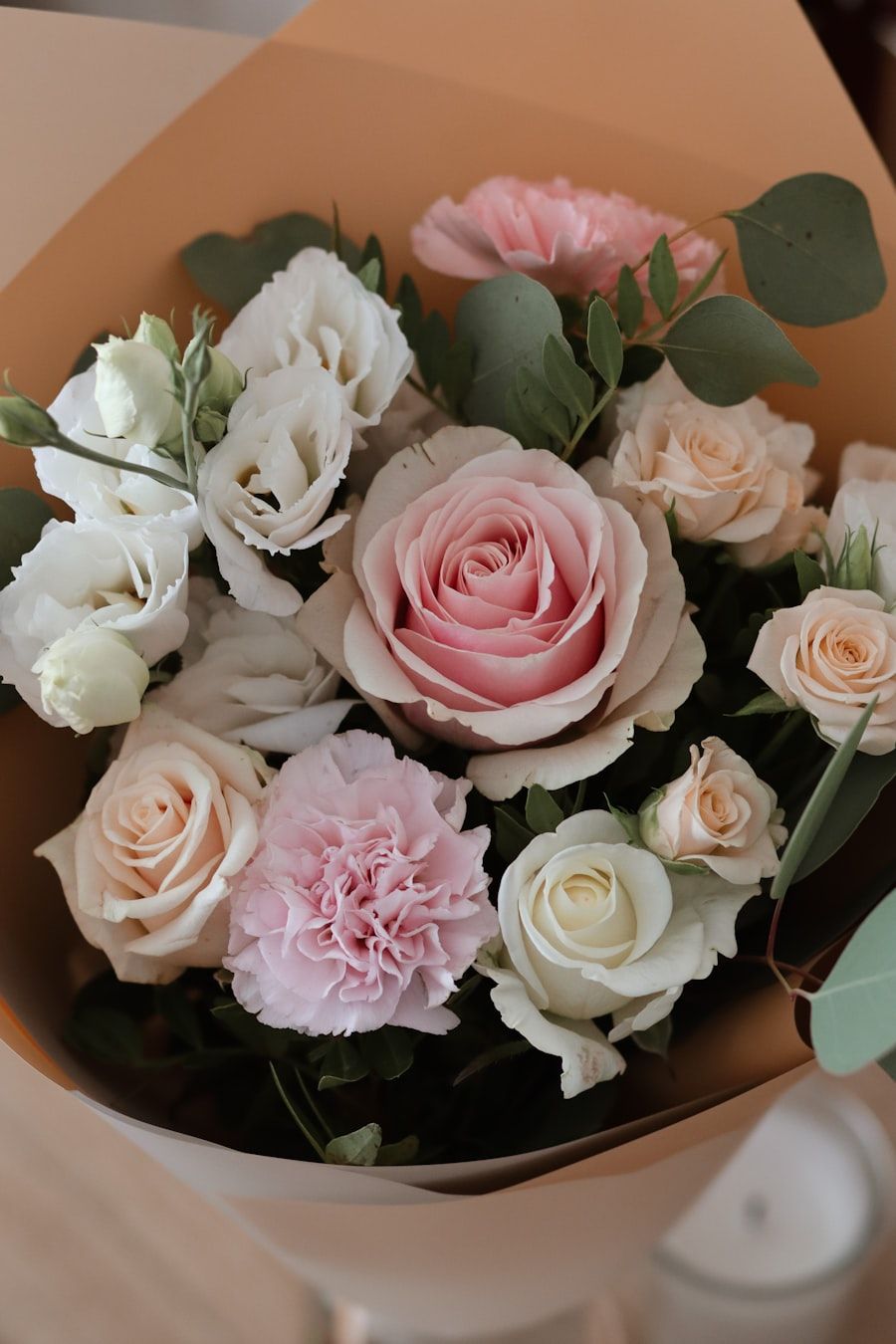
The flower trade has a language of its own, and a lot of it is never written down anywhere — you are simply expected to know that "EB" is a box, "disbud" is a growing method and "guard petals" are meant to be removed. This glossary gathers the terms a wholesale buyer actually meets, from grading and packing to post-harvest science and trade jargon, and defines each one plainly. Keep it as a reference; share it with new team members; use it to compare suppliers on equal terms.
Grades and measurements
Grade — The classification of a flower by measurable quality, most importantly stem length and head size, plus uniformity, freshness and freedom from damage. Grades let you buy a crop you have not seen.
Stem length — How a flower is sized, in centimetres (e.g. 40, 50, 60, 70, 80, 90+). Longer stems come from stronger plants and cost more; the right length depends on the job.
Head size / bloom size — The diameter of the flower head. Critical for roses, and the primary grade for hydrangeas, where price rises with the diameter.
Open stage / maturity — How far a flower has opened. Flowers travel best slightly closed and should open to peak after arrival; "tight," "cracking," "half-open" and "open" describe the stages.
Uniformity — How consistently every stem in a bunch matches. Tight grading means uniform stems that behave the same in the vase; loose grading hides surprises.
Select / fancy — Common names for top grades (largest heads, longest stems, best quality) that carry a premium.
Flower types and forms
Focal flower — The eye-catching centrepiece of an arrangement (rose, hydrangea, large chrysanthemum).
Secondary flower — A supporting bloom that adds colour and spread below the focal (spray roses, spray carnations).
Filler — Small-flowered or airy material that adds volume and texture cheaply (gypsophila, limonium, waxflower).
Greenery / foliage — Leafy material that frames a design and sets its shape (eucalyptus, ruscus, ferns).
Disbud (bloom) — A growing method where side buds are removed so one large terminal flower forms per stem; common for chrysanthemums and some carnations.
Spray — A stem that carries several smaller blooms on branches (spray roses, spray carnations, spray chrysanthemums); more blooms per stem.
Standard carnation — A carnation with one large bloom per stem, as opposed to a spray (mini) carnation.
Garden rose — A fuller, more romantic, often fragrant rose style prized for weddings and luxury design.
Packing and logistics
Bunch — The standard grouped unit flowers are sold in, commonly 10, 20 or 25 stems. Knowing the count lets you calculate a true price per stem.
Box / carton — The shipping unit. Freight is charged largely by volume and weight, so fuller boxes lower cost per stem.
EB (eight-bunch) / jumbo / full box — The large standard flower carton.
HB (half box) — Half the length of a full box.
QB (quarter box) — A smaller carton, a quarter of the full size.
Hard box — A stiffer carton used to protect delicate heads (large roses, hydrangeas) from crushing.
Dry pack — Flowers cooled and boxed without water for transport; standard for hardy stems on fast journeys, keeping weight and cost down.
Wet pack — Flowers transported with their stems in water or gel; used for thirsty or sensitive flowers, adding weight and cost.
Procona — A reusable bucket-style container flowers travel in standing in water, protecting hydration for sensitive product.
Consolidation — Combining products from several farms or growers into one coordinated order and shipment, under one standard and one point of contact.
Phytosanitary certificate — Official documentation certifying a plant shipment meets the destination country's health requirements; essential for cross-border flower trade.
Cold chain — The unbroken sequence of refrigerated handling from harvest to buyer that preserves vase life (see its own guide).
Pre-cooling — Rapidly removing field heat from just-harvested flowers to start the cold chain strong.
Post-harvest science
Vase life — How long a flower stays attractive in the vase after purchase. The key measure of quality performance.
Ethylene — An invisible plant hormone that accelerates ageing and petal drop, produced by ripening fruit, decay, exhaust and flowers themselves. Sensitive flowers are treated for it at good farms.
Ethylene-sensitive — Describes flowers (like carnations) that age fast on ethylene exposure and benefit from treatment and careful storage.
Botrytis — A grey mould that develops in damp, poorly ventilated conditions and ruins petals; controlled by good handling, ventilation and cold, dry storage.
Bent neck — When a flower head droops on a weakened stem just below the bloom, usually from dehydration or air blockage in the stem; classic in roses that missed hydration.
Blown / over-blown — A flower opened too far, past its saleable peak.
Conditioning — The process of preparing flowers on arrival: fresh cut, clean water, flower food, a cool deep drink before display.
Flower food / preservative — The sachet solution that feeds blooms, lowers water pH and fights bacteria, meaningfully extending vase life.
Hydration — Getting and keeping water into the stem; critical for thirsty flowers like hydrangeas.
Guard petals — The outer petals left on a rose to protect the bloom in transit; often bruised-looking and meant to be removed, not a defect.
Node — The swollen joint on a stem (notably carnations); cut between nodes, not through them, for best water uptake.
Turgidity — The firmness a well-hydrated stem and bloom have; loss of turgidity is the start of wilting.
Trade and commercial terms
Standing order / program — A recurring, planned weekly (or regular) order agreed with a supplier, as opposed to one-off spot buying.
Spot buying — Purchasing on the open market for immediate needs, at whatever price and availability the moment offers; most expensive around peaks.
Lead time — The gap between committing an order and the flowers being ready or delivered; long for peak crops that are grown to order.
Peak — A demand surge tied to an event (Valentine's, Women's Day, Mother's Day, All Saints', winter holidays) that lifts prices and tightens availability.
Origin — The country/region a flower is grown in (e.g. Colombia, Ecuador); drives variety, quality and reliability.
Shrinkage — Flowers bought but never sold — the trade's quiet margin killer, driven mostly by freshness and handling.
Landed cost — The true total cost of flowers delivered to you, including farm price, freight and handling; the number that actually matters, not the headline price.
Grower / farm partner — The plantation that grows the flowers; a consolidating brand works across a network of them.
MPS / Florverde / Rainforest Alliance — Major sustainability and quality certifications in floriculture (see the sustainability guide).
Buyer's FAQ
What does EB mean on a flower box?
EB means "eight-bunch," the large standard flower carton (also called a jumbo or full box). HB is a half box and QB a quarter box.
What are guard petals?
The outer petals left on a rose to protect the bloom in transit. They often look bruised and are meant to be peeled off, revealing the clean bloom beneath — a sign of protection, not poor quality.
What is the difference between a focal, secondary and filler flower?
Focal flowers are the centrepieces (roses, hydrangeas); secondary flowers add colour and spread (spray roses); fillers add cheap volume and texture (gypsophila). A balanced bouquet uses all three.
What is shrinkage in the flower trade?
Flowers you bought but could not sell before they faded — the biggest quiet drain on a flower business's profit, driven mostly by freshness at sourcing and handling on arrival.
What is a standing order or program?
A recurring, planned order agreed with a supplier, which locks quality and availability and lets you buy closer to real demand — the opposite of one-off spot buying.
Buying with a partner who speaks your language
At Vibra we work the way this glossary describes — clear grades, consolidated orders, a protected cold chain and planned programs across Colombia and Ecuador — so buying is simple and predictable. Tell us what your program needs and we will build it with you.
Build your program
Tell us what you need. We will bring the right flowers, growers, and solutions together.
Request a quote